To truly harness the potential of Artificial Intelligence in healthcare, we must drive the development and broad adoption of approaches that guarantee the safe and effective use of AI for every stakeholder.
At the October 2024 Arizona State University Annual National Diagnostics Summit, Carlos Lopez-Espina, Prenosis’ Senior Vice President of Research & Development, highlighted the importance of leveraging AI to advance equity in healthcare. He emphasized the necessity of building broad datasets, basing diagnoses on biology rather than potentially subjective biases (like clinician notes), navigating regulatory pathways, and providing clinicians with transparent models akin to a food label—clear, insightful, and actionable.
“Algorithms can have biases if the dataset it’s built upon isn’t disparate,” said Lopez-Espina. “We need to make sure health datasets include all populations. With AI, we have a responsibility to help all patients, in the same way that a manufacturer of a drug or a manufacturer of a diagnostic has these responsibilities. We need to use AI responsibly and always go through a regulatory process.”
The Racial Divide in Health Outcomes
Universal access to high-quality healthcare is a fundamental right, yet significant disparities in health outcomes persist, disproportionately affecting racial and ethnic minority communities. Sepsis—a global health challenge with a toll exceeding that of all cancers combined—highlights the profound consequences of inequity. A 2021 study identified disparities in sepsis-associated mortality rates among racial and ethnic groups in the United States, with Black or African American individuals and American Indian or Alaska Native individuals experiencing mortality rates 1.78- and 1.43-fold higher than age-matched White individuals, respectively.
The Urgency of Biologic Insights
To address these disparities, we must build large, inclusive datasets and tools that provide clearer insights, paving the way for more equitable care. Sepsis diagnosis and management, for example, could benefit immensely from these advancements.
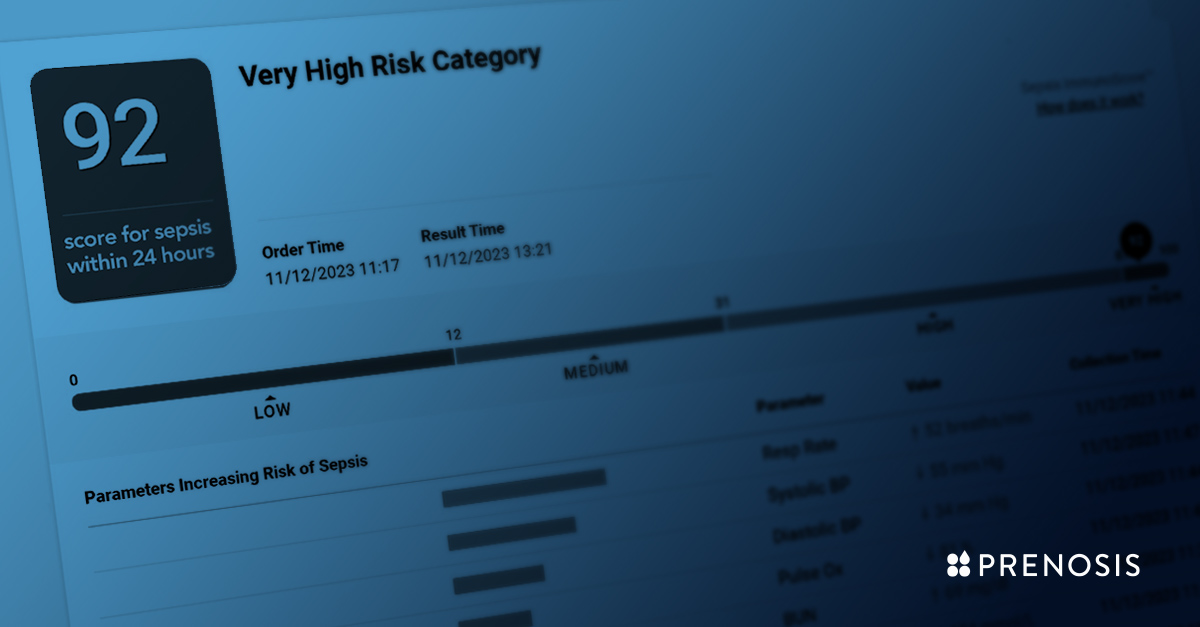
A retrospective cohort study by Filbin et al. revealed that nearly one-third of septic patients present with vague symptoms, complicating assessment. Enhanced data quality is essential to address such challenges. The Sepsis ImmunoScore™, the first FDA-authorized AI tool for sepsis, was built using Prenosis’ Immunix™ platform, a transformative approach to precision medicine in acute care.
Immunix™ enables the development and validation of new precision solutions such as AI biomarkers, combining biological data from more than 112,000 blood samples with clinical data from over 28,000 patients. This dataset—amassed over a decade of collaboration with U.S. hospitals—represents the world’s largest biological-clinical dataset for acute care patients with suspected infections.
A recent study published in NEJM AI demonstrated the Sepsis ImmunoScore™ outperforms traditional biomarkers, setting a higher standard for sepsis diagnostics and prediction. It showed that for the first time an FDA-authorized tool for sepsis has high accuracy for the diagnosis of sepsis and for the prediction of key adverse patient outcomes. The dataset’s inclusivity ensures precise diagnoses, irrespective of race or socioeconomic conditions.
In a validation cohort, the Sepsis ImmunoScore™ demonstrated consistent accuracy, with an AUC of 0.85 for Black or African American individuals and 0.81 for White individuals—evidence of its reliability across racial and ethnic groups. Given its accuracy, the ImmunoScore™ has the potential to help reduce mortality rates, particularly among populations disproportionately affected by sepsis-related deaths.
Closing the Health Equity Divide
Machine learning tools that analyze large, high-dimensional datasets illuminate biological signatures unique to each patient. By looking beyond race, gender, and other factors, these insights empower clinicians to provide timely, personalized care. Tools like the Sepsis ImmunoScore™ are key to reducing disparities by prioritizing the biological drivers of individual immune responses.
Prenosis champions the mantra “see people differently.” By harnessing machine learning through Immunix™, the Sepsis ImmunoScore™ demonstrates that accurate, equitable diagnostics are possible. This is just the beginning. Diagnostic and pharmaceutical partners can utilize the Immunix™ platform to develop new precision medicine solutions in acute care, helping to close the health equity divide one patient at a time.
Related Posts


Two Hats, One Mission: Reflections from ACEP 2025
September 29, 2025
Transforming Sepsis Care with AI: Prenosis Delivers Innovation
September 19, 2025